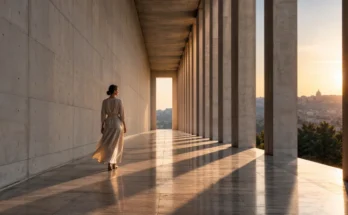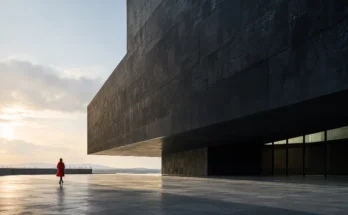
Some photographs feel almost three-dimensional even though they exist on a completely flat screen or sheet of paper. Your eyes seem to move through the image rather than simply across it.
That sense of space is often created through layered composition.
Instead of treating a scene as one flat arrangement of objects, photographers divide it visually into foreground, middle ground, and background elements. Each layer has a different job.
One might introduce the scene, another may contain the main subject, while the final layer provides context or atmosphere.
This approach becomes especially valuable when photographing complicated environments such as crowded streets, forests, markets, architecture, events, or detailed landscapes. Without careful organization, these scenes can quickly become visually confusing.
Using layered composition to add depth to complex photographs allows you to organize that complexity rather than eliminate it. With thoughtful positioning, perspective, focus, framing, and light, even a busy scene can become easy to explore and visually engaging.
Why Layered Composition Creates a Sense of Depth
Photography compresses a three-dimensional world into a two-dimensional image. The photographer therefore needs visual cues that convince the viewer that some objects are closer while others are farther away.
One of the simplest methods is separating the scene into foreground, middle ground, and background. Adobe notes that using these distinct areas can add visual interest, depth, and dimension to photographs.
Imagine photographing mountains beside a lake. A straightforward image containing only distant mountains may look beautiful but relatively flat.
Now place textured rocks near the camera, use the lake as the middle ground, and keep the mountains in the distance. Suddenly, the photograph has several spatial stages that the eye can travel through.
The individual objects have not necessarily become more interesting. Their spatial relationships have.
That is the foundation of layered photographic composition.
Build Strong Foreground, Middle Ground, and Background Layers
A useful way to approach complicated scenes is to stop looking at them as collections of objects and start looking at them as visual planes.
1. Foreground
The foreground contains elements nearest the camera. It might include plants, doorways, people, furniture, reflections, shadows, or architectural details.
Foreground objects can immediately establish scale and distance. They can also act as natural frames around subjects deeper inside the photograph.
StudioBinder describes foreground elements as a direct way of creating depth because they provide viewers with a clearer perception of space within a two-dimensional image.
2. Middle Ground
The middle ground frequently contains the principal subject or action.
If you photograph a street market, for instance, hanging fabric might occupy the foreground, a vendor could become the middle-ground subject, and crowds or buildings might complete the background.
3. Background
The background provides environmental information.
It can establish location, weather, scale, or mood without necessarily demanding attention. The key is creating enough visual seperation between these layers that they remain readable.
Use Overlap to Make Distance Feel Real
Perfectly separated objects can sometimes make a photograph feel unusually flat.
Overlap is often more effective.
When one object partially blocks another, the brain immediately understands which one is closer. A pedestrian overlapping a building, a tree crossing part of a mountain, or a doorway covering the edge of a distant room provides a natural depth cue.
The effect seems simple because we experience it constantly in everyday vision.
In complex photography, however, overlap must remain intentional. Too much of it can turn people, objects, and shapes into an unreadable cluster.
Try moving sideways instead of immediately changing lenses. A small shift in camera position may transform awkward overlaps into clearly defined layers.
You may discover that two subjects that appeared merged from one position become perfectly separated after moving only a meter.
Advanced composition often depends on these surprisingly small adjustments.
Control Perspective to Strengthen Spatial Relationships
Perspective determines how objects at different distances relate to one another.
Moving closer to a foreground object makes it appear much larger compared with distant elements. Moving farther away can compress those differences and make separate planes appear visually closer together.
Adobe describes perspective in photography as the spatial relationship between subjects within a frame, with foreground, middle ground, and background playing important roles in creating dimensionality.
Consider photographing an old European street.
From standing height with a distant viewpoint, the buildings may look relatively uniform. Lower the camera close to the cobblestones and suddenly the foreground stones become prominent, the street leads through the middle ground, and the architecture rises behind them.
The location is unchanged, but the perspecive completely changes how the viewer experiences it.
Instead of zooming immediately, experiment by physically moving higher, lower, closer, or sideways. Camera position is one of the strongest tools for building depth.
Let Focus Decide How Much of Each Layer Matters
Not every layer needs to be equally sharp.
In fact, selective focus can make a complicated composition easier to understand.
A shallow depth of field might leave a foreground object softly blurred while keeping the middle-ground subject sharp. The viewer still recognizes the foreground as a spatial layer, but it does not compete with the main subject.
Alternatively, deep focus can keep several planes sharp simultaneously.
StudioBinder explains that deep focus allows foreground, middle ground, and background elements to remain visible together, giving viewers an opportunity to explore relationships throughout the entire scene.
The right choice depends on what the photograph needs to communicate.
For a portrait inside a crowded café, selective focus may simplify the enviroment. For an architectural interior where relationships between several rooms matter, greater depth of field may make the image more effective.
Focus is therefore not simply a technical setting. It is part of visual storytelling.
Use Light and Contrast to Separate Complex Layers
Depth does not come only from physical distance.
Lighting can separate layers even when objects sit relatively close together.
Suppose a person wearing dark clothing stands against another dark object. Even if they occupy different distances, they may visually merge.
Moving the subject toward brighter light, changing the shooting angle, or waiting for different illumination can create clearer separation.
Atmospheric conditions can help as well. In landscape photography, distant mountains often become lighter and less contrasty because of atmospheric haze. Nearby objects typically retain stronger texture and contrast.
This naturally creates a sense of distance.
You can apply a similar principle deliberately by giving different visual weight to different planes. A detailed foreground, clearly defined middle ground, and softer distant background can make a frame feel much deeper without relying on extreme blur.
The goal is not equal visibility everywhere. It is readable visual hierarchy.
Use Leading Lines to Connect the Layers
Layers become stronger when something visually connects them.
Roads, walls, fences, rivers, railway tracks, shadows, staircases, and rows of objects can carry the eye from foreground to background.
Imagine a photograph where a stone path begins near the bottom edge of the frame, passes a person in the middle ground, and ends near a building in the distance.
The path does two jobs simultaneously. It establishes perspective while guiding attention.
This is particularly useful in busy scenes because leading lines give viewers a logical route through visual information.
However, lines should lead somewhere meaningful. A dramatic line directing the eye toward an irrelevant trash bin or empty corner can weaken the composition.
Before taking the photograph, follow major lines with your eyes. Notice where they start, where they travel, and where they eventually stop.
That simple habit can significantly improve complex compositions.
Keep Every Layer Useful, Not Merely Busy
More layers do not automatically create a better photograph.
A common mistake is adding foreground objects simply because photographers have heard that foreground interest creates depth. Random branches, blurry signs, or unrelated objects can become distractions rather than useful visual elements.
Every important layer should contribute something.
The foreground might establish context. The middle ground could contain the story. The background may reveal location or scale.
In stronger compositions, these elements work together.
Imagine photographing a craftsperson inside a workshop. Tools positioned close to the camera establish the working environment, the craftsperson becomes the central subject, and shelves of finished products in the background reveal the broader story.
That is useful complexity.
Compare it with a frame filled with unrelated clutter where nothing clearly supports the subject. Both photographs contain many elements, but only one has meaningful visaul organization.
Practice Layered Composition Without Overcomplicating It
You do not need spectacular landscapes or elaborate sets to practice.
A café, park, neighborhood street, office, or even your home can provide several depth planes.
Choose one clear subject first. Then look for something closer to the camera that can provide foreground interest and something behind the subject that adds context.
Take several versions from slightly different positions.
Try one shot with a clean foreground, another using partial foreground framing, and another with stronger overlap. Compare how each version changes the apparent distance between objects.
Also pay attention to the edges of the frame. Layered images contain more visual information, which means distracting elements can easily creep into corners.
The strongest complex photographs often come from photographers who know exactly what to exclude.
Layered composition is one of the most effective ways to transform a busy, flat-looking photograph into an image with believable space and visual direction.
Foreground, middle ground, and background elements create the basic structure, while overlap, perspective, lighting, focus, and leading lines strengthen the illusion of depth.
The key is intentionality. Adding more objects does not necessarily make an image more sophisticated; arranging meaningful elements at different distances does.
Next time you face a complicated scene, do not immediately search for ways to simplify everything. Look for layers first.
Move around, change your viewpoint, experiment with focus, and notice how objects overlap. With practice, you will begin seeing depth before pressing the shutter – and your photographs will give viewers much more to explore.